Brake Repair
Complete brake system repair including pads, rotors, calipers, and ABS.
Learn MoreIf your ABS warning light is on, your vehicle's anti-lock braking system has detected a problem. CastleAuto provides ABS diagnosis and repair in Castle Rock — identifying the specific cause and addressing it so your ABS functions properly when you need it most.
The anti-lock braking system (ABS) is a safety feature that prevents your wheels from locking up during hard braking. Without ABS, if you brake hard enough, the wheels can stop rotating while the vehicle is still moving — causing a skid. In a skid, you lose steering control, and the vehicle may slide in an unpredictable direction.
ABS works by monitoring the rotational speed of each wheel using sensors. If the system detects that a wheel is about to lock up, it rapidly modulates the brake pressure to that wheel — essentially pulsing the brake many times per second, faster than a human could. This keeps the wheel rotating just enough to maintain traction and steering control, while still slowing the vehicle effectively.
ABS is particularly valuable on slippery surfaces, such as wet roads, gravel, or ice, where wheel lockup is more likely. It also helps during panic stops on dry pavement, allowing you to steer around an obstacle while braking hard.
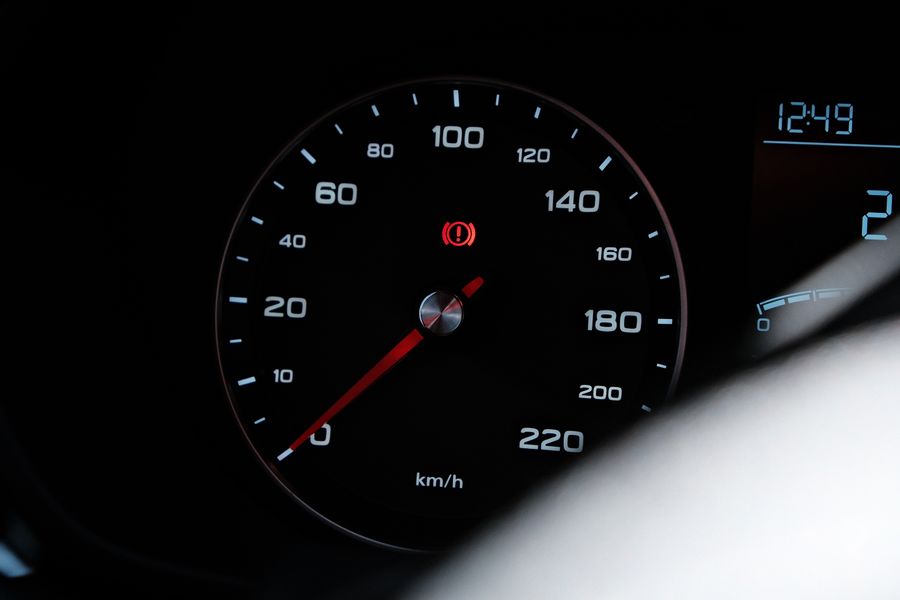
The ABS warning light on your dashboard illuminates when the vehicle's computer detects a problem in the anti-lock braking system. When this light is on, it means the ABS has been disabled — your standard brakes still work, but the anti-lock function will not operate during hard braking.
It's important to understand what the ABS light does and doesn't tell you:
If your ABS light stays on while driving, call CastleAuto at 720-458-8077 to schedule a diagnosis.
ABS problems can originate from several different components in the system. Here are some of the most common issues:
Because the ABS warning light doesn't identify the specific problem, diagnosis is the critical first step. The ABS computer stores diagnostic trouble codes that indicate which part of the system is reporting a fault. Reading these codes narrows down the source of the problem.
However, a trouble code is only a starting point. A code pointing to a wheel-speed sensor, for example, could mean the sensor itself is bad — or it could mean the wiring between the sensor and the module is damaged, or the tone ring is cracked. Proper diagnosis involves testing the identified component and its related circuit to pinpoint the actual failure.
This is why simply replacing parts based on a code reading without further testing can lead to unnecessary repairs. Accurate diagnosis saves time and money by identifying the root cause before any parts are replaced.
The ABS consists of several key components that work together:
Located at each wheel, these sensors monitor how fast each wheel is rotating. The ABS module uses this data to detect when a wheel is about to lock up.
The electrical wiring that carries signals from the wheel-speed sensors to the ABS module. These wires are exposed to harsh conditions and can corrode, break, or short.
The electronic control unit that processes sensor data and determines when to modulate brake pressure. It's essentially the brain of the ABS.
The hydraulic assembly that physically modulates brake pressure to individual wheels based on commands from the ABS module. It contains solenoid valves and, in many systems, a pump.
Here's what ABS repair at CastleAuto typically involves:
When the ABS light is on, you may not notice any difference in everyday driving — your regular brakes still work. That's why it's easy to put off having it checked. But there are good reasons to have ABS problems diagnosed promptly:
If your ABS light is on, don't wait. Call CastleAuto at 720-458-8077 to schedule a diagnosis. You can also learn more about our broader brake repair services.
Questions & Answers
The ABS warning light indicates a problem with the anti-lock braking system. Your standard brakes typically still work, but the anti-lock function may not operate properly during hard braking or on slippery surfaces. The exact cause requires diagnosis.
Your standard brakes usually still function with the ABS light on, but the anti-lock feature may not work. It's best to have the system diagnosed as soon as possible, especially if you drive in conditions where ABS is important, such as wet or icy roads.
Common causes include faulty wheel-speed sensors, damaged wiring or connectors, ABS module failures, or hydraulic component issues. Diagnosis is needed to identify the specific cause, as the ABS warning light doesn't tell you which component is at fault.
ABS is a supplemental system that builds on your regular brakes. It prevents wheel lockup during hard braking to help maintain steering control. Standard brake components like pads, rotors, and fluid affect overall braking, and ABS issues can sometimes be related to these components as well.
Call CastleAuto now or schedule your brake service online. We'll get your brakes back to full stopping power — safely and efficiently.
1375 Caprice Dr D, Castle Rock, CO 80109